How Can a Wellness Technology Company Play It Smart?

CASE STUDY TITLE

How Can a Wellness Technology Company Play It Smart?

AUTHORED BY

Jayoda Kulatunga

DATE

12/15/2024

Executive Summary

This case study examines Bellabeat, a wellness-focused tech company, and its potential to expand its market presence by leveraging user data. Bellabeat’s mission is to empower women through smart devices that track activity, sleep, stress, and hydration, all integrated with their app. The primary objective of this study was to analyze smart device usage data to uncover trends and provide actionable insights to enhance Bellabeat’s marketing strategy and product offerings.

The analysis focused on two datasets: daily activity and sleep tracking data. Using R programming, the data was cleaned, merged, and enriched with derived metrics such as sleep efficiency and activity-to-sedentary ratios. Key findings revealed that a significant portion of users exhibit low activity levels and suboptimal sleep efficiency. Additionally, active users displayed better overall wellness indicators, while sedentary users and those with inefficient sleep habits presented opportunities for targeted marketing and product improvements.

Based on these insights, the following high-level recommendations were developed:

  1. Target sedentary users with campaigns promoting Bellabeat as a tool for increasing activity.
  2. Enhance sleep features by integrating advanced monitoring and guided relaxation techniques.
  3. Develop segmented marketing strategies tailored to different user groups.
  4. Foster user retention with loyalty programs and rewards for consistent engagement.

This data-driven approach underscores Bellabeat’s potential to grow by addressing user pain points and creating personalized experiences. The recommendations offer actionable steps to strengthen customer engagement, optimize product features, and position Bellabeat as a leader in the smart wellness device market.


Introduction

Bellabeat is a high-tech company specializing in health-focused smart devices designed to empower women in their wellness journeys. Founded in 2013 by Urška Sršen, an artist, and Sando Mur, a mathematician, Bellabeat combines cutting-edge technology with aesthetically pleasing designs. Over the years, the company has grown rapidly, establishing itself as a leader in the women’s wellness market with a range of innovative products that track activity, sleep, stress, hydration, and reproductive health.

Operating in the competitive health and wellness technology industry, Bellabeat faces the challenge of expanding its global market share while continuing to innovate. The smart device market is expected to grow significantly, fueled by increasing consumer awareness of health and fitness. This case study focuses on Bellabeat’s efforts to leverage data insights to optimize its marketing strategy and enhance product offerings.

The project centers on analyzing user data from smart devices to uncover trends and behaviors that can inform Bellabeat’s strategic decisions. The insights generated will enable the company to tailor its marketing campaigns, refine its products, and address the specific needs of its target audience. This case study not only highlights the importance of data-driven strategies in the tech industry but also showcases how Bellabeat’s mission to inspire women aligns with its innovative approach to wellness.


Statement
of the Problem

Bellabeat, a wellness-focused technology company, is striving to establish itself as a leader in the competitive smart device market. Despite its innovative products tailored specifically for women, Bellabeat faces the challenge of effectively utilizing consumer data to refine its marketing strategies, enhance product features, and increase its market share.

The global smart wearable market has grown significantly, with a projected value of over $90 billion by 2028, driven by increasing consumer interest in health and wellness. However, Bellabeat’s competitors, such as Fitbit and Garmin, have already captured substantial market share by leveraging data insights to better understand user behavior and preferences. To remain competitive, Bellabeat must harness its own user data to uncover actionable insights that can inform strategic decisions.

The specific problem addressed in this case study is Bellabeat’s need to analyze smart device usage data to:

  1. Identify trends in user activity, sleep, and overall wellness behavior.
  2. Understand the needs and pain points of its target audience.
  3. Develop targeted marketing strategies to engage both existing and potential customers.

This challenge is underscored by trends in user behavior, such as:

  • Increasing sedentary lifestyles among consumers.
  • Suboptimal sleep efficiency observed in certain user segments.
  • Growing consumer demand for personalized and actionable wellness solutions.

By addressing these issues, Bellabeat can not only enhance customer engagement but also strengthen its competitive positioning in the smart wearable market.


Decision Criteria
and Assumptions

Decision Criteria

To evaluate alternative courses of action and develop recommendations for Bellabeat, the following criteria were used:

  1. Impact on User Engagement:
  • Metrics: Average daily steps, sedentary minutes, sleep efficiency.
  • Goal: Identify strategies to encourage higher activity levels and improve sleep habits among users.
  1. Alignment with Business Goals:
  • Benchmarks: Bellabeat’s mission to empower women through wellness-focused technology.
  • Goal: Ensure recommendations align with enhancing product value and user satisfaction.
  1. Feasibility of Implementation:
  • Factors: Availability of resources, technical capabilities, and ease of integrating new features or strategies into existing products.
  • Goal: Prioritize actions that can be implemented efficiently and cost-effectively.
  1. Market Competitiveness:
  • Benchmarks: Features offered by competitors in the smart wellness device market.
  • Goal: Highlight opportunities for differentiation and innovation to attract more users.
  1. Potential for Long-Term Growth:
  • Factors: User retention rates, scalability of recommendations, and potential to attract new customers.
  • Goal: Ensure that strategies contribute to sustained business success.

Assumptions

The following assumptions guided the analysis and recommendations:

  1. User Behavior Trends:
  • Assumption: Users with low activity levels and poor sleep efficiency are more likely to benefit from targeted interventions.
  1. Data Reliability:
  • Assumption: The provided datasets accurately represent typical user behavior and are free from significant biases or inaccuracies.
  1. Technological Capabilities:
  • Assumption: Bellabeat has the resources and expertise to implement app enhancements and marketing campaigns effectively.
  1. Market Readiness:
  • Assumption: There is an existing market demand for products and features that improve wellness through data-driven insights.
  1. Competitor Analysis:
  • Assumption: Bellabeat’s competitors are not yet fully addressing the specific needs of sedentary users or those with inefficient sleep patterns, leaving an opportunity for differentiation.

Influential Factors

  1. Quantitative Metrics:
  • Steps, sedentary minutes, sleep efficiency, and activity-to-sedentary ratios provided clear indicators of user wellness.
  1. Qualitative Insights:
  • User behavior trends and feedback highlighted key areas of improvement for Bellabeat’s products.
  1. Benchmarks and Comparisons:
  • Analysis of competitor offerings and industry standards ensured that recommendations were both relevant and competitive.
  1. User Segmentation:
  • Distinct needs of active, sedentary, and sleep-challenged users were considered to develop tailored strategies.

By using these criteria and assumptions, the recommendations were designed to address Bellabeat’s user challenges while supporting its strategic growth in the smart wellness market.


Data Analysis

Methodology for Data Collection and Analysis

The data used in this case study was collected from activity and sleep tracking datasets. These datasets provide user-level metrics on daily steps, sedentary minutes, sleep duration, and time in bed. The methodology for data collection and analysis included the following steps:

  1. Data Collection:
  • Imported two datasets:
  • Daily activity dataset containing user activity metrics.
  • Sleep tracking dataset containing sleep patterns.
  1. Data Cleaning:
  • Inspected for missing values and duplicates, removed inconsistencies.
  • Reformatted date fields to a consistent format (YYYY-MM-DD).
  • Merged datasets on Id and ActivityDate to create a combined dataset.
  1. Data Transformation:
  • Derived key metrics:
  • Sleep Efficiency = Total Minutes Asleep / Total Time in Bed.
  • Activity-to-Sedentary Ratio = Total Steps / Sedentary Minutes.
  • Aggregated data to calculate average values per user for metrics like steps, sedentary minutes, and sleep efficiency.
  1. Analysis and Visualization:
  • Conducted statistical summaries to understand central tendencies and variability.
  • Created visualizations to identify trends and relationships in the data.

Key Findings

1. Activity Patterns
  • Observation:
  • Users displayed a wide range of activity levels.
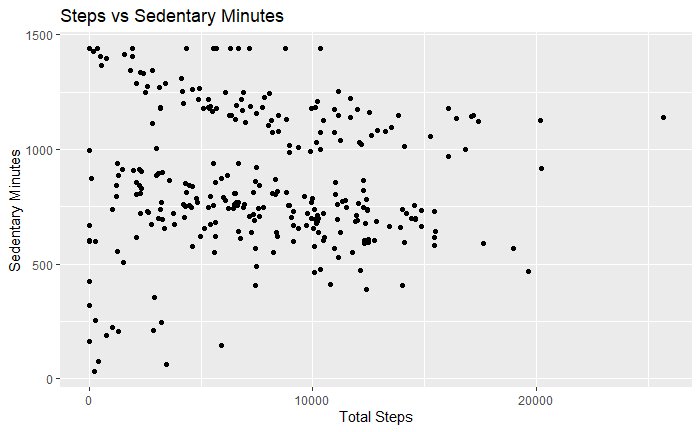
  • Many users exhibited high sedentary minutes, with fewer than 5,000 daily steps logged on average by a significant portion.
  • Visualization:
  • Scatterplot: Shows the inverse relationship between daily steps and sedentary minutes, indicating that increased steps lead to reduced sedentary behavior.
2. Sleep Patterns
  • Observation:
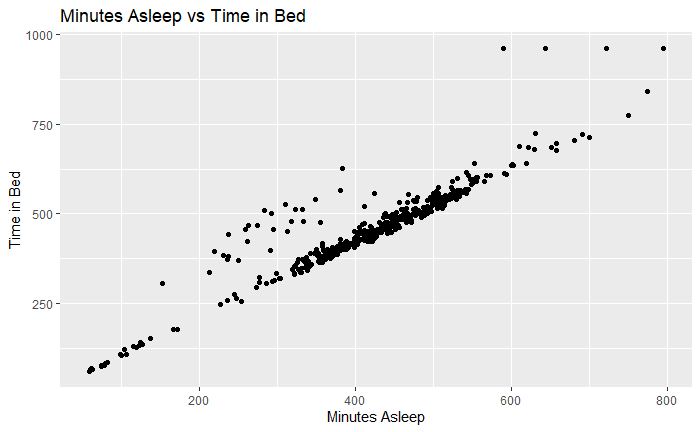
  • Most users maintained an average sleep efficiency of ~94%, but inefficiencies were observed in a subset of users.
  • Some participants spent excessive time in bed but achieved suboptimal sleep durations.
  • Visualization:
  • Scatterplot: Compares total minutes asleep to total time in bed, revealing outliers with low efficiency.
3. Combined Insights
  • Observation:
  • Users with higher activity levels also demonstrated better wellness indicators, such as reduced sedentary time and balanced sleep patterns.
  • Sedentary behavior and poor sleep efficiency often coincided, highlighting key areas for intervention.

Narrative Explanation

The analysis highlighted critical behavioral patterns among users, such as low activity levels and suboptimal sleep efficiency for certain segments. These insights provide a foundation for tailoring Bellabeat’s products and marketing strategies to address user pain points effectively. For instance, users with high sedentary behavior can benefit from motivational features in the Bellabeat app, while those with poor sleep efficiency can be targeted with personalized sleep improvement tools.

Tables and Graphs

Metric

Minimum

Median

Mean

Maximum

Total Steps

0

5,986

6,547

28,497

Sedentary Minutes

32

1,057

995.3

1,440

Sleep Efficiency

50%

94.2%

91.8%

100%

Total Minutes Asleep

58

432.5

419.2

796

Total Time in Bed

61

463.0

458.5

961


  • Scatterplot: Shows the inverse relationship between daily steps and sedentary minutes, indicating that increased steps lead to reduced sedentary behavior.


  • Scatterplot: Compares total minutes asleep to total time in bed, revealing outliers with low efficiency.


Alternative Courses of Action

To address the problem of enhancing Bellabeat’s marketing strategy through insights derived from smart device usage data, the following alternative solutions or strategies were considered:

1. Develop Tailored Marketing Campaigns

Description: Design targeted marketing campaigns aimed at specific user segments, such as sedentary individuals or those with inefficient sleep patterns. These campaigns would highlight how Bellabeat’s products can address these challenges.

Pros:

  • Increases user engagement by addressing specific pain points.
  • Enhances the effectiveness of marketing efforts through personalization.
  • Leverages existing data insights to create impactful messaging.

Cons:

  • Requires significant investment in data segmentation and marketing tools.
  • Potential risk of alienating users outside the targeted segments.
  • Success depends heavily on the quality of customer data.

Potential Risks:

  • Over-segmentation might dilute the brand’s overall message.
  • Ineffective targeting could lead to wasted resources.

Potential Benefits:

  • Improved customer satisfaction and retention.
  • Increased conversion rates for specific Bellabeat products.

2. Enhance Product Features

Description: Develop new features in the Bellabeat app to address identified user needs, such as activity reminders, gamification elements, or advanced sleep analytics.

Pros:

  • Strengthens the value proposition of Bellabeat’s products.
  • Encourages long-term customer engagement.
  • Differentiates Bellabeat from competitors.

Cons:

  • High development costs and resource requirements.
  • Risk of feature overload, which might confuse users.
  • Requires ongoing updates and maintenance.

Potential Risks:

  • Delayed rollout could reduce the effectiveness of new features.
  • Failure to meet user expectations might lead to negative feedback.

Potential Benefits:

  • Increased customer satisfaction and product loyalty.
  • Attracts new users looking for comprehensive wellness solutions.

3. Implement Loyalty Programs

Description: Introduce loyalty programs that reward users for consistent app usage and product engagement, such as discounts, badges, or exclusive content.

Pros:

  • Boosts user retention and encourages consistent usage.
  • Creates a sense of community and belonging.
  • Provides opportunities to gather additional user behavior data.

Cons:

  • Initial setup and maintenance costs can be high.
  • Effectiveness depends on the perceived value of the rewards.
  • May not attract new users but only retain existing ones.

Potential Risks:

  • Misaligned rewards could fail to motivate users.
  • Poor implementation could erode brand value.

Potential Benefits:

  • Strengthens brand loyalty and engagement.
  • Increases the lifetime value of customers.

4. Leverage Partnerships and Collaborations

Description: Collaborate with fitness influencers, health organizations, or other wellness brands to expand Bellabeat’s reach and credibility.

Pros:

  • Enhances brand visibility and trust.
  • Access to new customer bases through partners.
  • Potential cost-sharing for marketing efforts.

Cons:

  • Dependency on partner’s reputation and success.
  • Collaboration agreements may be complex and time-consuming.
  • Results may vary depending on partner alignment.

Potential Risks:

  • Misaligned values with partners could damage the brand.
  • Over-reliance on partnerships might limit independent growth.

Potential Benefits:

  • Broadens market reach and credibility.
  • Creates opportunities for cross-promotion and shared innovation.

5. Invest in Data Analytics and AI

Description: Utilize advanced data analytics and artificial intelligence to improve user insights, enabling more precise targeting and personalized product recommendations.

Pros:

  • Increases the accuracy and relevance of insights.
  • Provides a competitive edge through innovation.
  • Enhances decision-making processes.

Cons:

  • High upfront investment in technology and expertise.
  • Requires significant data privacy and security measures.
  • Long-term ROI might take time to realize.

Potential Risks:

  • Misuse or misinterpretation of data could lead to ineffective strategies.
  • Data breaches could harm the brand’s reputation.

Potential Benefits:

  • Delivers actionable insights for sustained growth.
  • Improves the customer experience through precise recommendations.

By evaluating these alternative courses of action, Bellabeat can choose a combination of strategies to effectively address user needs, enhance its marketing efforts, and drive long-term growth.


Recommendations

Based on the analysis of the alternatives and the data-driven insights derived from Bellabeat’s smart device usage data, the following recommendations are proposed to enhance Bellabeat’s marketing strategy, improve product offerings, and ultimately increase market share.

  1. Develop Tailored Marketing Campaigns Targeting specific user segments such as sedentary individuals and those with suboptimal sleep efficiency is crucial for increasing engagement. Bellabeat should use data insights to design personalized marketing campaigns that address these challenges directly. For example, users with high sedentary behavior can be targeted with campaigns that emphasize how Bellabeat products can help boost daily activity levels. Similarly, users with poor sleep efficiency can benefit from targeted ads promoting advanced sleep tracking features.
    Rationale: This recommendation aligns with the criteria of Impact on User Engagement, as it directly addresses the pain points identified in the data (low activity and poor sleep quality). Tailored campaigns will increase user satisfaction and improve the relevance of marketing efforts. This strategy also supports Market Competitiveness by differentiating Bellabeat from its competitors, who may not be focusing as intently on these specific user segments. While it requires investment in segmentation and marketing tools, the potential benefits in terms of customer satisfaction, conversion rates, and brand loyalty outweigh the risks.
  2. Enhance Product Features Bellabeat should invest in enhancing its app’s features to promote higher activity levels and improve sleep efficiency. This could include adding activity reminders, gamification elements, or advanced sleep analytics. Additionally, providing personalized wellness tips based on the data collected could further drive engagement and help users achieve their wellness goals.
    Rationale: Enhancing product features aligns with Alignment with Business Goals, as it strengthens the value proposition of Bellabeat’s products and supports its mission to empower women through wellness-focused technology. This recommendation also directly addresses the Feasibility of Implementation criteria, as Bellabeat has the resources and expertise to implement app enhancements. By improving the product’s capabilities, Bellabeat can increase customer loyalty and retention, setting itself apart from competitors. The investment required for feature development may be high, but the long-term benefits in customer satisfaction, retention, and brand differentiation justify this strategy.
  3. Invest in Data Analytics and AI Leveraging advanced data analytics and artificial intelligence (AI) will allow Bellabeat to gain deeper insights into user behavior, enabling more precise targeting and personalized recommendations. AI-driven features, such as customized wellness plans or real-time activity and sleep suggestions, could significantly enhance the user experience. Additionally, AI can help predict trends in user behavior, which will inform future product development and marketing strategies.
    Rationale: This recommendation aligns with the criteria of Potential for Long-Term Growth, as AI and data analytics can provide continuous insights to support sustained business success. It also addresses Market Competitiveness by enabling Bellabeat to offer innovative, personalized experiences that outpace competitors. While the initial investment in technology is substantial, the ability to gather actionable insights and improve user engagement through AI-driven solutions offers significant long-term returns. Moreover, this strategy supports Impact on User Engagement by enabling Bellabeat to provide highly relevant and individualized recommendations, enhancing customer experience.
  4. Implement Loyalty Programs Introducing a loyalty program that rewards users for consistent engagement with the app—such as completing daily activity goals or improving sleep efficiency—can increase user retention. Loyalty rewards can include discounts, exclusive content, or even personalized health insights. These programs can also help gather additional user data, which can be used to further personalize the Bellabeat experience.
    Rationale: This recommendation supports Impact on User Engagement by incentivizing consistent usage, which leads to better customer retention and increased product engagement. It also aligns with Feasibility of Implementation, as loyalty programs are relatively straightforward to execute with minimal development requirements. Although the rewards program’s effectiveness depends on the perceived value, it has the potential to enhance User Retention and increase the lifetime value of customers.
  5. Leverage Partnerships and Collaborations Collaborating with fitness influencers, wellness bloggers, and health organizations can help Bellabeat expand its reach. These partnerships would allow Bellabeat to tap into new customer bases, gain credibility, and share marketing costs. By working with trusted partners, Bellabeat can enhance its brand visibility and build trust with new and existing customers.
    Rationale: This strategy supports Market Competitiveness by allowing Bellabeat to gain a larger share of the market through strategic collaborations. It also aligns with Potential for Long-Term Growth, as partnerships with reputable influencers or wellness brands can provide a steady stream of new customers. Although there is a dependency on the success of partners, the benefits of increased brand credibility and market visibility outweigh the risks.

Final Recommendation:

After evaluating all alternatives, the most effective strategy for Bellabeat involves a combination of Tailored Marketing Campaigns, Enhancing Product Features, and Investing in Data Analytics and AI. This integrated approach addresses the key issues of low user activity and sleep inefficiency, while also positioning Bellabeat as an innovative leader in the wellness technology market. By focusing on personalized engagement, enhancing the product’s features, and utilizing advanced analytics, Bellabeat can increase user retention, attract new customers, and achieve sustainable long-term growth.


Implementation Plan


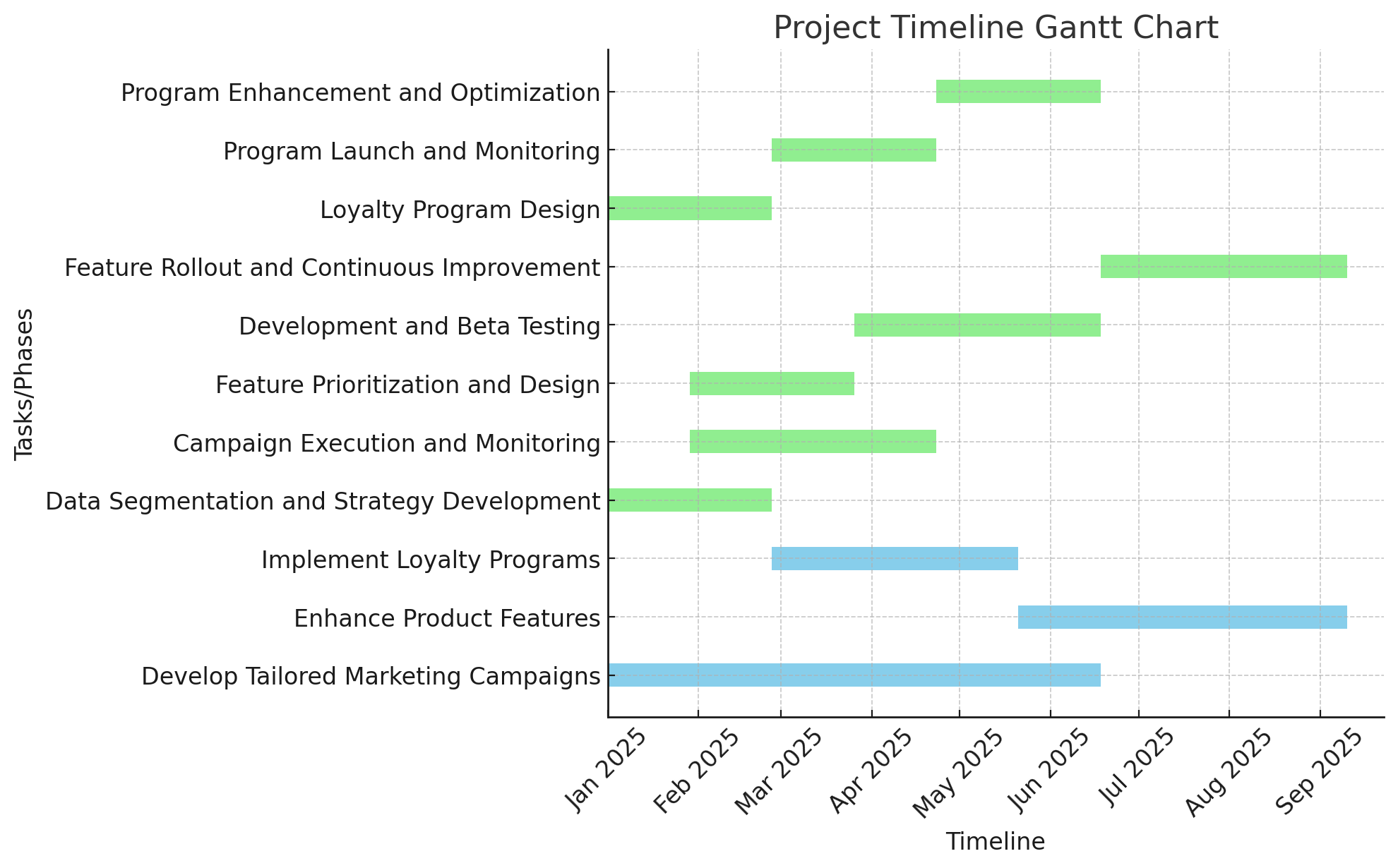
To implement the chosen recommendations for Bellabeat, we propose a clear, structured plan that addresses the necessary steps, responsibilities, resources, and potential challenges. The goal is to optimize marketing strategies, enhance product features, and ensure user engagement, based on the insights gathered from the data analysis.


1. Develop Tailored Marketing Campaigns

Timeline: 3-6 months

  • Phase 1: Data Segmentation and Strategy Development (1-2 months)
  • Actions:
  • Segment users based on activity levels, sleep patterns, and engagement (e.g., sedentary, sleep-impaired, active).
  • Develop targeted messaging that addresses specific pain points for each segment (e.g., campaigns for sedentary users highlighting activity encouragement).
  • Collaborate with the marketing team to design personalized ads and content.
  • Responsibilities:
  • Data Analytics Team (segmentation and insights extraction).
  • Marketing Team (campaign design and execution).
  • Product Team (ensuring messaging aligns with product features).
  • Resources Needed:
  • User data analytics tools (e.g., R, Tableau).
  • Creative team for campaign design.
  • Potential Challenges & Mitigation:
  • Challenge: Insufficient user data for segmentation.
  • Mitigation: Regular data collection and continuous engagement with users to improve data quality.
  • Challenge: Over-segmentation leading to fragmented messaging.
  • Mitigation: Test campaigns on smaller segments first before scaling.
  • Phase 2: Campaign Execution and Monitoring (2-4 months)
  • Actions:
  • Launch segmented marketing campaigns (e.g., ads on social media, in-app promotions, email campaigns).
  • Monitor campaign performance in real-time and adjust as needed.
  • Measure key metrics such as engagement rates, conversion rates, and user retention.
  • Responsibilities:
  • Marketing Team (campaign launch and tracking).
  • Data Analytics Team (monitoring performance).
  • Resources Needed:
  • Advertising budget.
  • Digital platforms for campaigns (e.g., Facebook, Instagram, email software).
  • Potential Challenges & Mitigation:
  • Challenge: Low engagement with targeted campaigns.
  • Mitigation: A/B testing for campaign variations to identify the most effective approach.

2. Enhance Product Features

Timeline: 6-9 months

  • Phase 1: Feature Prioritization and Design (2-3 months)
  • Actions:
  • Prioritize features based on user needs (e.g., activity reminders, gamification, enhanced sleep analytics).
  • Collaborate with the product team to design the features (UX/UI design, technical specifications).
  • Responsibilities:
  • Product Development Team (feature design and prioritization).
  • UX/UI Designers (design user interfaces).
  • Data Analytics Team (provide insights into user behavior).
  • Resources Needed:
  • Design and development software (e.g., Figma, Jira, Asana).
  • Developer resources for building new features.
  • Potential Challenges & Mitigation:
  • Challenge: Technical difficulties in feature integration.
  • Mitigation: Conduct internal testing and pilot programs to ensure smooth feature integration.
  • Phase 2: Development and Beta Testing (4-6 months)
  • Actions:
  • Develop the new features and integrate them into the app.
  • Conduct beta testing with a select group of users to gather feedback.
  • Responsibilities:
  • Development Team (feature coding and testing).
  • Beta Testers (providing feedback).
  • Resources Needed:
  • Developer tools (e.g., IDE, testing tools).
  • Beta testing platform (e.g., TestFlight for iOS).
  • Potential Challenges & Mitigation:
  • Challenge: Negative feedback from beta testers.
  • Mitigation: Iterate on features based on feedback and adjust for the final release.
  • Phase 3: Feature Rollout and Continuous Improvement (7-9 months)
  • Actions:
  • Release the features to all users.
  • Monitor feature usage and gather user feedback for continuous improvements.
  • Responsibilities:
  • Product Team (feature release and monitoring).
  • Customer Support (assist users with new features).
  • Resources Needed:
  • App update infrastructure (e.g., app stores).
  • Potential Challenges & Mitigation:
  • Challenge: Slow adoption of new features.
  • Mitigation: Promote features through in-app announcements, tutorials, and customer support.

3. Implement Loyalty Programs

Timeline: 3-5 months

  • Phase 1: Loyalty Program Design (1-2 months)
  • Actions:
  • Design the structure of the loyalty program, including reward types (e.g., discounts, badges, exclusive content).
  • Define program criteria (e.g., consistent app usage, achieving wellness milestones).
  • Responsibilities:
  • Marketing Team (designing the program).
  • Data Analytics Team (defining usage metrics).
  • Product Team (ensuring program integration into the app).
  • Resources Needed:
  • Data tools for tracking user activity (e.g., Google Analytics).
  • Reward systems (e.g., discounts, exclusive content).
  • Potential Challenges & Mitigation:
  • Challenge: Unclear reward preferences.
  • Mitigation: Conduct user surveys and focus groups to understand what rewards would be most motivating.
  • Phase 2: Program Launch and Monitoring (3-4 months)
  • Actions:
  • Launch the loyalty program to all users.
  • Monitor participation rates, reward redemption, and overall user engagement.
  • Responsibilities:
  • Marketing Team (program promotion).
  • Data Analytics Team (monitoring participation and performance).
  • Resources Needed:
  • User engagement tools (e.g., email, in-app notifications).
  • Potential Challenges & Mitigation:
  • Challenge: Low user participation.
  • Mitigation: Offer bonus rewards for initial sign-up and encourage participation through app notifications.
  • Phase 3: Program Enhancement and Optimization (5 months onwards)
  • Actions:
  • Evaluate the success of the loyalty program and make necessary adjustments.
  • Add new rewards and features based on user feedback and engagement metrics.
  • Responsibilities:
  • Marketing Team (optimizing program features).
  • Data Analytics Team (tracking success and identifying improvements).
  • Resources Needed:
  • Tools for tracking loyalty metrics (e.g., CRM systems).
  • Potential Challenges & Mitigation:
  • Challenge: Program becoming outdated or unengaging.
  • Mitigation: Regularly update rewards and introduce new program tiers to keep the program exciting.

Conclusion

This implementation plan ensures that Bellabeat can effectively address its current market challenges by leveraging data insights to enhance marketing strategies, improve product features, and foster stronger user engagement. By following these steps, Bellabeat can achieve its goal of increasing market share and solidifying its leadership position in the wellness technology space. Regular monitoring and adjustments will ensure that the company stays on track with its objectives and continuously meets user needs.


Exhibits and Schedules

Tables and Graphs

Metric

Minimum

Median

Mean

Maximum

Total Steps

0

5,986

6,547

28,497

Sedentary Minutes

32

1,057

995.3

1,440

Sleep Efficiency

50%

94.2%

91.8%

100%

Total Minutes Asleep

58

432.5

419.2

796

Total Time in Bed

61

463.0

458.5

961

Reference in Report:

  • Used in Data Analysis

  • Scatterplot: Shows the inverse relationship between daily steps and sedentary minutes, indicating that increased steps lead to reduced sedentary behavior.

Reference in Report:

  • Used in Data Analysis

  • Scatterplot: Compares total minutes asleep to total time in bed, revealing outliers with low efficiency.

Reference in Report:

  • Used in Data Analysis

Reference in Report:

  • Used in Implementation Plan


References

Below is a list of all the sources, references, and citations used in the case study report. These sources include datasets, courses, and other materials related to data preparation, cleaning, and analysis.

  1. Arashnic. (n.d.). Fitbit Fitness Tracker Data. Kaggle. Retrieved from https://www.kaggle.com/datasets/arashnic/fitbit
    CC0: Public Domain. Dataset made available through Mobius. Retrieved from https://www.kaggle.com/arashnic.
    This dataset contains personal fitness tracker data from thirty Fitbit users, including minute-level output for physical activity, heart rate, and sleep monitoring.
  2. Coursera. (n.d.). All About File Naming. Data Preparation. Retrieved from https://www.coursera.org/learn/data-preparation/lecture/OXHvS/all-about-file-naming
    This lecture provides guidelines and best practices for file naming in data analysis, which helps ensure organized and accessible datasets.
  3. Coursera. (n.d.). Organization Guidelines. Data Preparation. Retrieved from https://www.coursera.org/learn/data-preparation/supplement/fLKJI/organization-guidelines
    This resource offers guidelines for organizing data files and folders effectively to streamline data analysis projects.
  4. Coursera. (n.d.). Data Import Basics. Data Analysis with R. Retrieved from https://www.coursera.org/learn/data-analysis-r/supplement/qfrIM/data-import-basics
    This lecture covers the basics of importing data into R, a critical skill for performing data analysis tasks.
  5. Coursera. (n.d.). Cleaning Up with the Basics. Data Analysis with R. Retrieved from https://www.coursera.org/learn/data-analysis-r/lecture/3FBCt/cleaning-up-with-the-basics
    This lecture explains essential techniques for cleaning datasets, including handling missing values and correcting inconsistencies in data.
  6. Coursera. (n.d.). Transforming Data. Data Analysis with R. Retrieved from https://www.coursera.org/learn/data-analysis-r/lecture/d108v/transforming-data
    This lecture introduces data transformation techniques, such as reshaping and modifying datasets to prepare them for analysis.
  7. Google Docs. (n.d.). R Script Template. Retrieved from https://docs.google.com/document/d/1gmPCr0zqjOtVK_y_BKsaUItBJHakw9ghB4x7dZYVvvo/template/preview
    This R script template provides a structure for creating reusable and efficient R scripts for data analysis projects.

These references provide a combination of practical resources, datasets, and tutorials that have been essential in shaping the analysis and recommendations in the case study.